01
Amateur Wrestling
Experience with balance, leverage, resistance and what it means to get caught and keep learning.
Before Kick His Dick was a class, it was a series of hard lessons: losing, getting back up, losing a sense of safety and deciding to build something better.
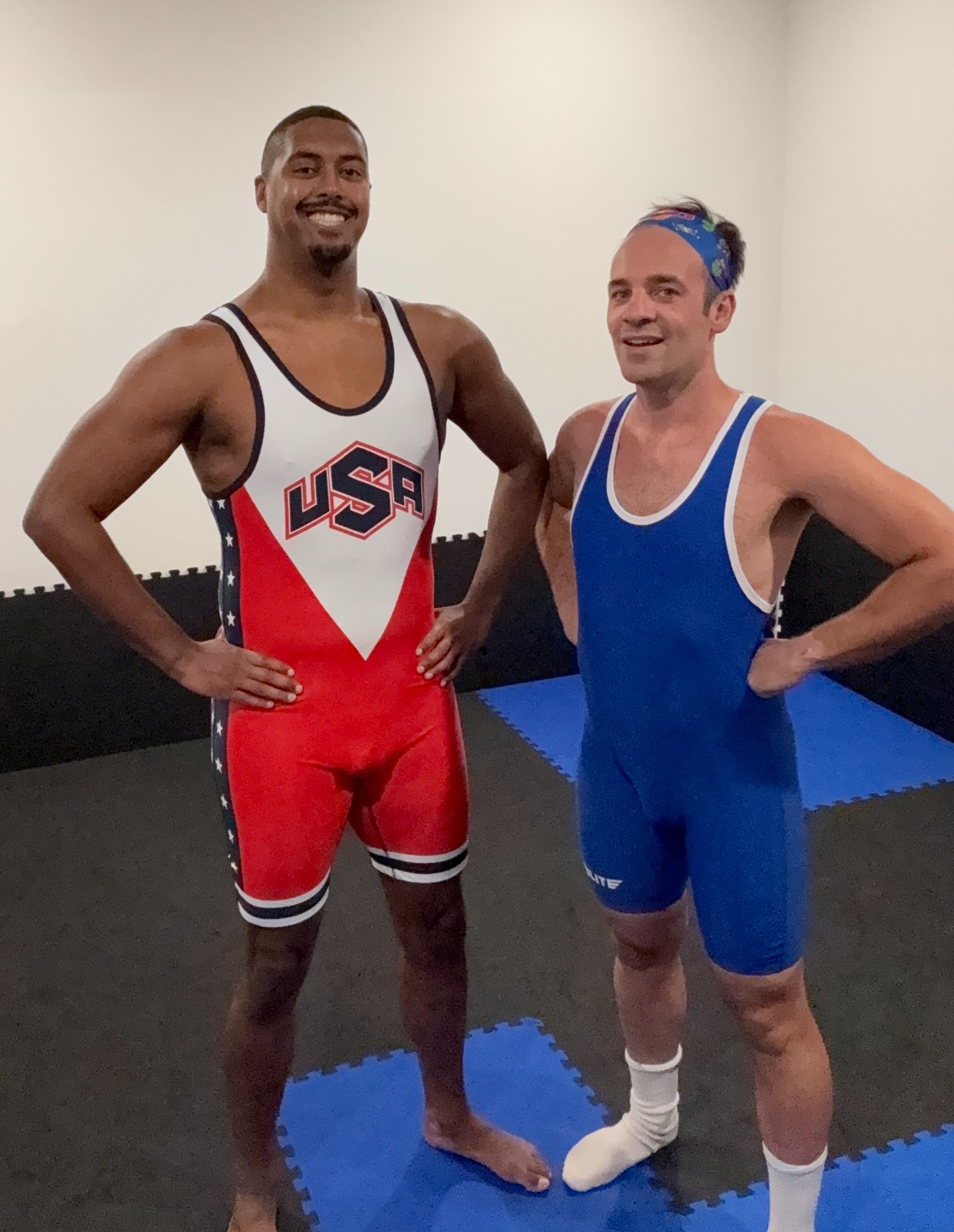
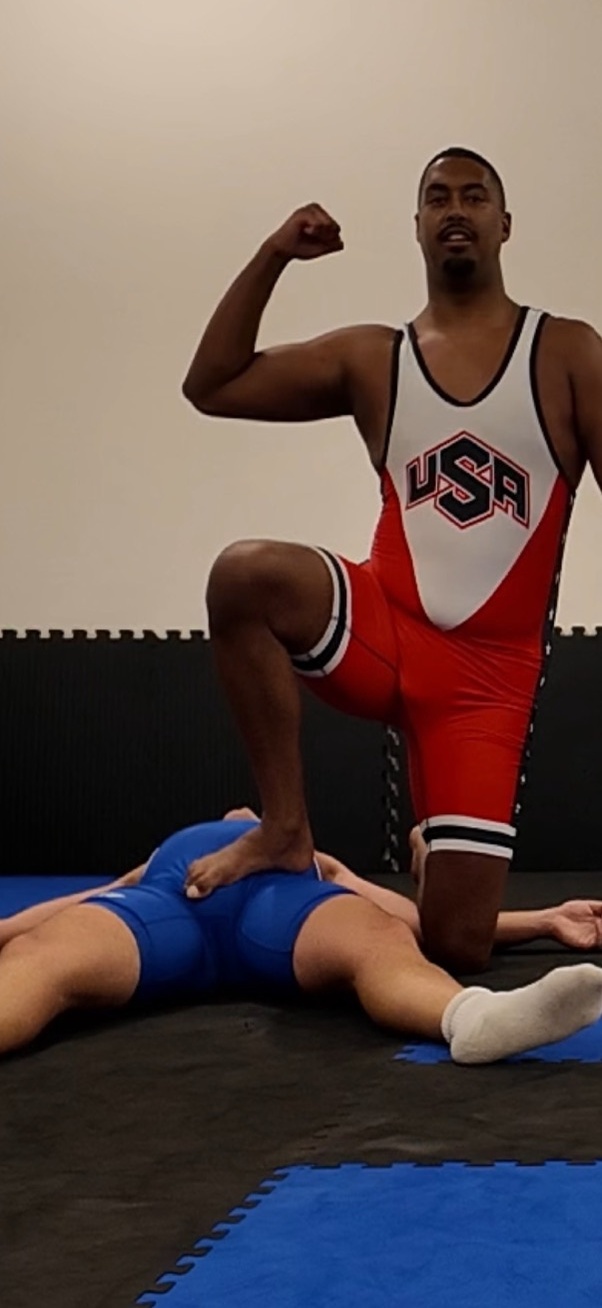
Michael and I started the match standing side by side. We ended it very differently.
Wrestling taught me balance, leverage and pressure. It also taught me something more useful: experience does not make anyone invincible. I lost. I got caught. Sometimes badly.
I could have walked away embarrassed. Instead, I learned, recovered and got back on the mat.
Humility is one of the best self-defense instructors you’ll ever meet.
That is why I do not teach perfection. Beginners are allowed to feel awkward, make mistakes and laugh. Confidence grows by showing up—not by pretending fear or failure never happen.
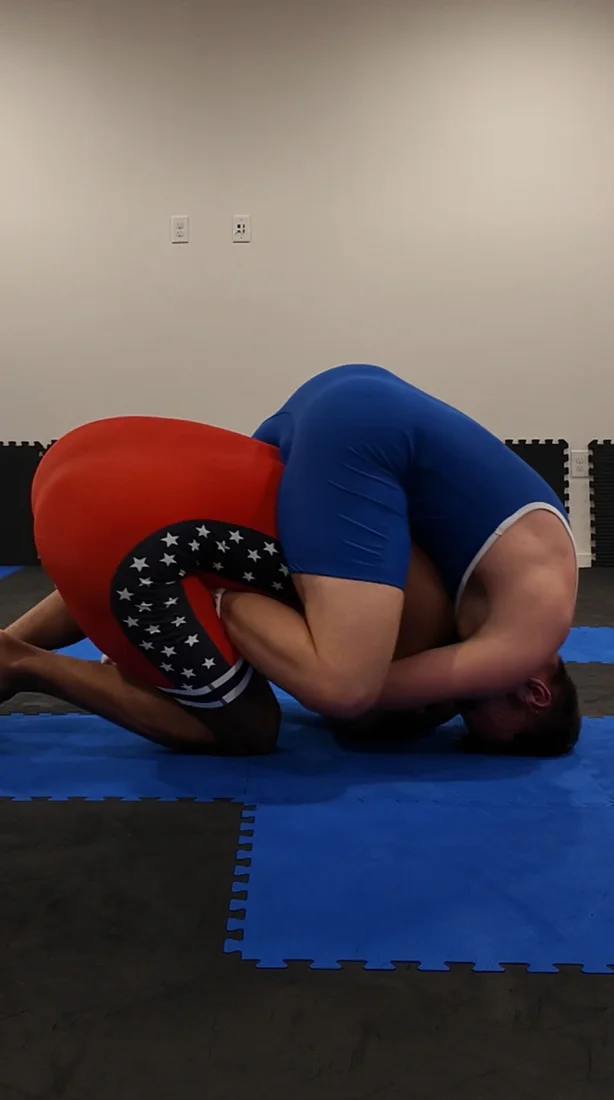
I did not win every match, and the lesson was never that I was invincible. But this moment is me in blue, on top, beating the larger Michael through position and leverage.
That is one of the ideas behind KHD: strength helps, but awareness, balance, timing and commitment can change what happens next.
Technique does not erase size. It gives you options.
A few years ago, while driving for Uber, I was assaulted.
Afterward, I realized I never wanted to feel that unprepared again. I started taking self-defense classes because I wanted practical skills and a better understanding of how I might respond under pressure.
I learned a lot. But the rooms often felt intense, highly technical or designed for people who already loved martial arts.
That question became Kick His Dick.
I built the class I wish I had found: practical enough to matter, welcoming enough for beginners and funny enough that people could relax, participate and remember what they learned.
The name gets attention. The mission is bigger than the joke.
And yes—if I ever see the asshole who assaulted me again, I know exactly where I’m aiming.
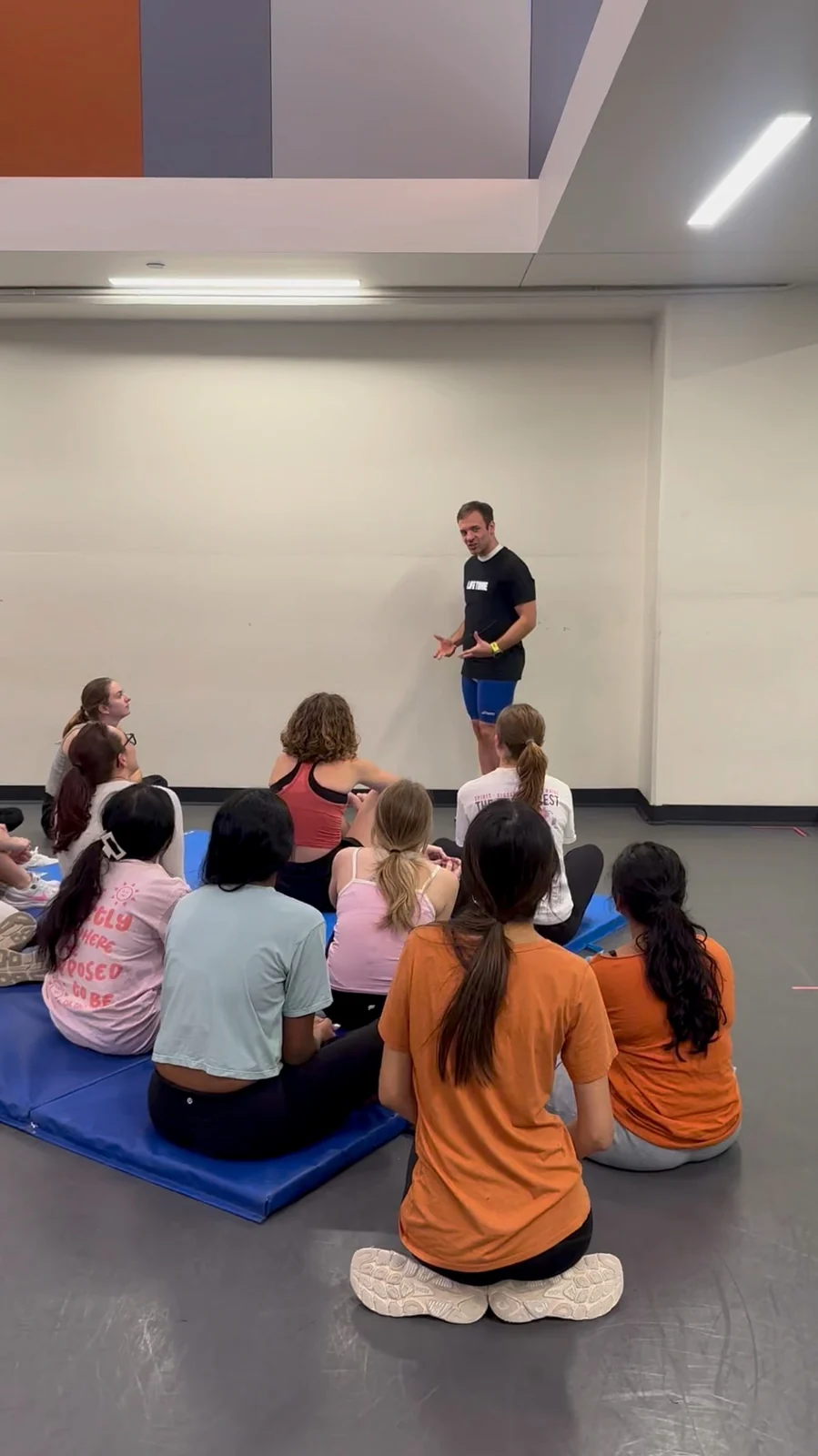
I do not expect anyone to walk into class feeling fearless. I create a room where people feel comfortable enough to try, make mistakes, laugh and keep learning.
We work on practical movement, vulnerable targets, creating space, using your voice and getting away safely. The atmosphere stays light, but the purpose stays serious.
I volunteer as the demonstration partner because the instruction is clearer—and because the room gets less intimidating when the instructor is willing to be the target.
This is the version of KHD I want people to see before they meet me: clear instruction, real participation and a room that feels safe enough to laugh while everyone is learning.
I do not ask students to trust a speech. I give them a chance to prove it to themselves.
Why I want you to beat meThe pink singlet is real. The posing is real. The complete lack of shame is also real.
Self-defense matters. Ego does not. Being willing to look ridiculous helps beginners understand that nobody has to arrive polished or fearless.
Serious purpose. Twenty percent chaos.
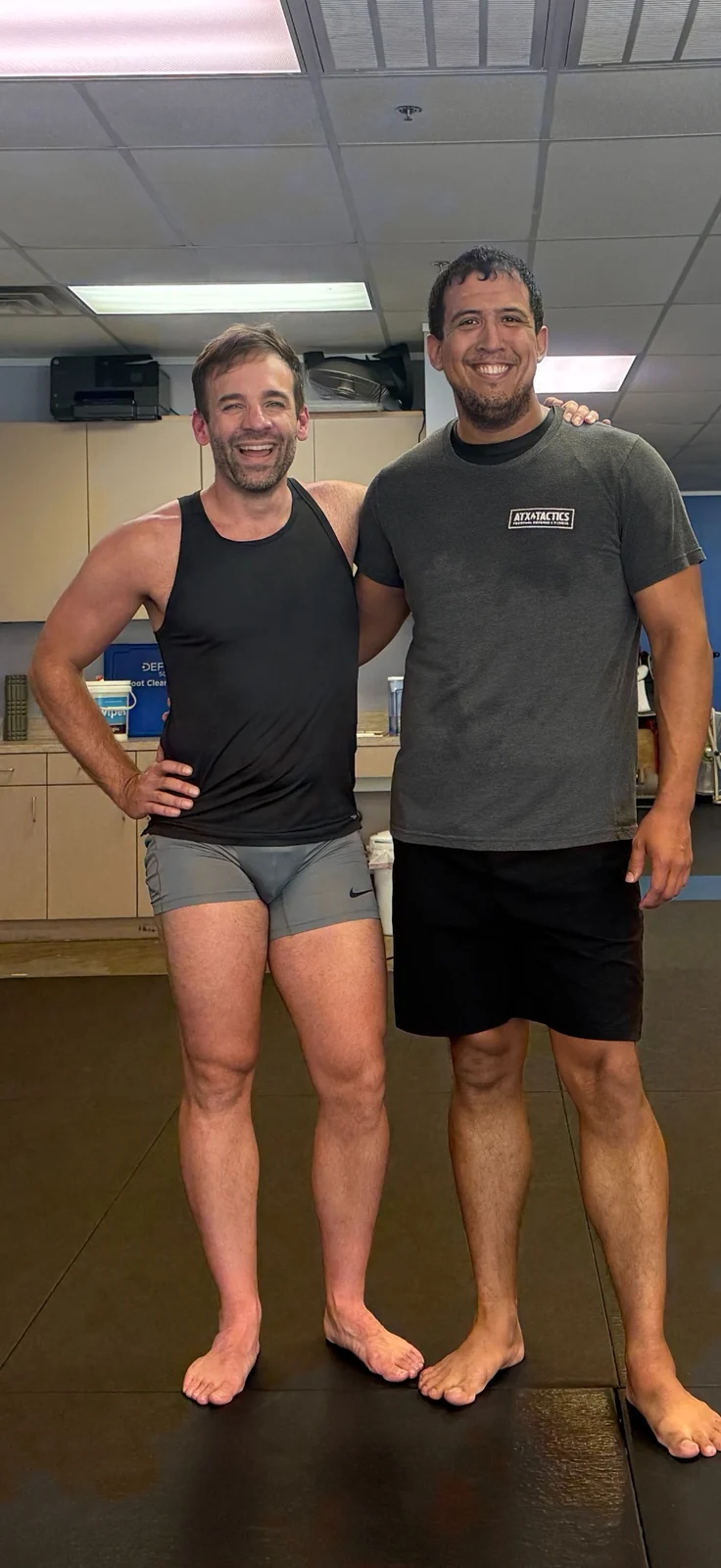
KHD has a sense of humor, but the coaching is not improvised. I continue training, pressure-testing ideas and learning from people with deeper experience.
The goal is not to pretend one class makes anyone invincible. It is to give women useful options, a stronger voice and more confidence under pressure.
No ego. No fake mastery. Keep learning.
Experience with balance, leverage, resistance and what it means to get caught and keep learning.
Years of coaching different experience levels while keeping the room moving, engaged and included.
An understanding of what it feels like to lose a sense of safety—and why reclaiming confidence matters.